
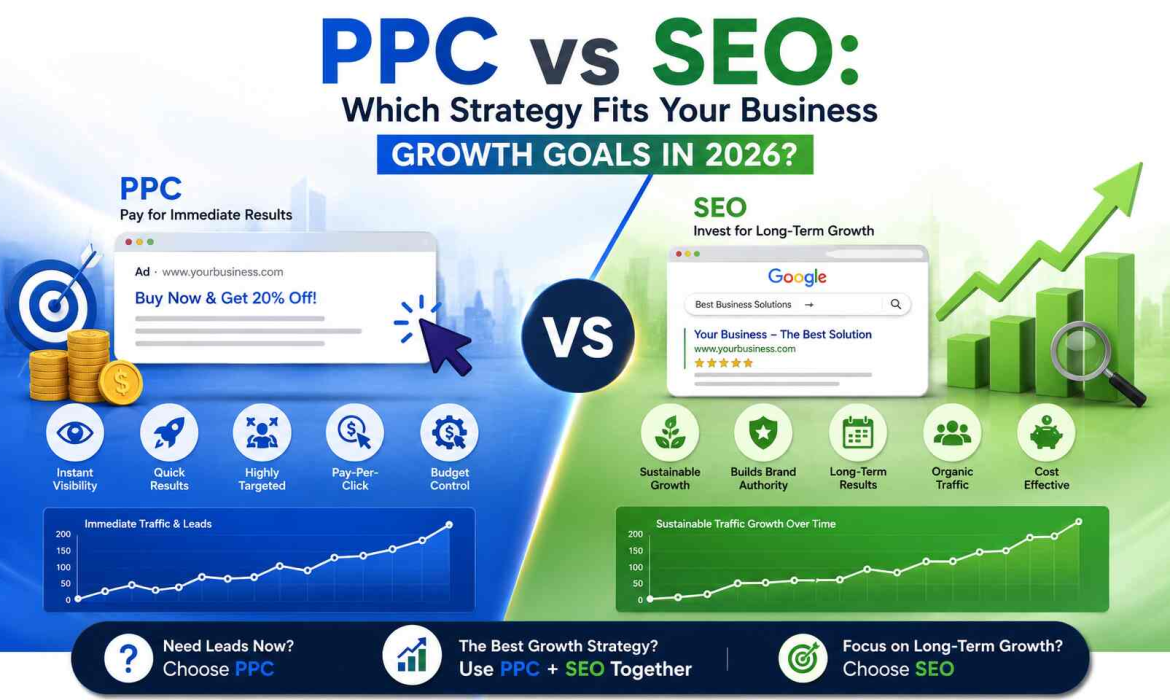
PPC vs SEO is one of the most common questions business owners ask when deciding where to put their next marketing rupee. The honest answer: they solve different problems. But the data shows clear patterns in cost, speed, and long-term return. These patterns should shape how you sequence your investment between the two.
PPC vs SEO: The Core Difference
The PPC vs SEO decision starts with understanding what each channel actually buys you. PPC (pay-per-click) buys immediate visibility. The moment you launch a campaign, you can appear at the top of search results. SEO (search engine optimisation) earns visibility over time. Good SEO work improves your site’s relevance, authority, and technical quality so it ranks organically, without paying per click.
PPC vs SEO: What the Numbers Say
Looking at PPC vs SEO through hard numbers makes the trade-off clearer. Organic search accounts for roughly 53% of all web traffic. Paid search brings in about 27%. On the click-through side, the top organic result earns an average CTR of around 37%. Paid search ads average closer to 3%. Users have learned to scroll past ads, especially on informational and comparison searches. On conversion rate, SEO-driven traffic converts at around 14.6%, compared to roughly 3.75% for search PPC. Organic visitors tend to be further along in their research, so they arrive with higher intent for many query types.
| Metric | SEO | PPC |
|---|---|---|
| Share of web traffic | ~53% | ~27% |
| Average CTR (top result) | ~37% | ~3% |
| Average conversion rate | ~14.6% | ~3.75% |
| Estimated ROI | ~$12 per $1 invested | ~$2 per $1 spent |
| Time to meaningful results | 3–6+ months | Immediate |
| Cost structure | Front-loaded effort, low ongoing cost | Ongoing cost per click |
Note: figures above are industry-wide benchmarks from third-party marketing research, not Hawkium client data. They will vary by industry and competitiveness.
Despite SEO’s stronger long-term numbers, small and mid-sized businesses often put several times more budget into PPC. Why? PPC delivers visible, immediate results that are easy to report on. SEO’s payoff takes longer to show up, and it’s harder to attribute in the short term. For a deeper look at where your budget fits, see our guide on ecommerce SEO if you run an online store.
PPC vs SEO: When PPC Is the Better First Move
The PPC vs SEO answer tips toward paid search when:
- You need leads or sales this month — a new business, a product launch, or a seasonal promotion
- You’re testing a new market or offer and need fast data on which keywords and messages convert
- Your organic competition is entrenched and ranking will realistically take 6–12+ months
- You have a clear, measurable conversion event and healthy margins to support the cost per click
PPC vs SEO: When SEO Should Be the Priority
The PPC vs SEO answer tips toward organic when:
- You’re building a business for the next 2–5 years, not just the next quarter
- Your category has high-intent informational searches that PPC can’t economically capture at volume
- You want compounding returns — content and rankings you build today keep generating traffic without ongoing per-click cost
- Your PPC cost-per-click is high relative to your margins, common in competitive B2B and legal/finance verticals
PPC vs SEO: The Real Answer Is Most Growing Businesses Need Both
Framed as an either/or choice, PPC vs SEO misses the strongest strategy for most businesses. Sequencing and combining them works better. PPC can generate immediate revenue and real keyword-and-conversion data while your SEO foundation gets built. That PPC data — which keywords convert, which ad copy resonates, which landing pages perform — directly informs smarter SEO content decisions. As organic rankings mature, you can shift budget away from expensive PPC keywords. Let organic traffic take over there, and redirect PPC spend toward new campaigns or seasonal pushes.
PPC vs SEO: How the Balance Shifts by Business Type
The right PPC vs SEO balance also depends on what kind of business you run. Ecommerce stores with thousands of SKUs typically need SEO for category-level and long-tail traffic. They still lean on PPC — especially Shopping ads — for immediate revenue during sales periods. Local service businesses, like real estate agencies or restaurants, often see the fastest PPC vs SEO payoff from local SEO and Google Business Profile optimisation first. Local intent converts quickly and cheaply without paid spend. B2B and SaaS companies with long sales cycles usually need both running in parallel from day one: PPC to generate pipeline while the multi-month SEO content build compounds in the background. There’s no universal split. The right mix comes from your sales cycle length, margin per customer, and how competitive your keywords already are.
One more factor matters here: seasonality. A business with sharp seasonal peaks — festive-season retail, tax-season financial services, admission-cycle education — often needs to flex PPC spend up hard around those windows, regardless of how strong its organic rankings are the rest of the year. SEO content built during the off-season should target the exact questions buyers ask before that peak hits, so it’s already ranking when demand spikes rather than starting the climb too late.
A Practical PPC vs SEO Budget-Split Framework
| Phase | Focus |
|---|---|
| Month 1–3 | Lead with PPC for immediate pipeline while starting technical SEO and content foundations in parallel |
| Month 4–9 | Maintain PPC for high-intent, high-margin keywords; scale content and link-building for SEO |
| Month 10+ | Reallocate PPC budget away from keywords where you now rank well organically; use PPC to defend brand terms and test new opportunities |
Common Mistakes When Weighing PPC vs SEO
- Judging SEO on a 60-day timeline: SEO is a compounding investment. Expecting PPC-speed results leads businesses to abandon it just before it starts working.
- Turning off PPC the moment cash is tight: This often kills the channel generating the most immediate, measurable revenue. Cutting underperforming keywords is usually smarter than cutting the whole channel.
- Not using PPC data to inform SEO content: Paid search data is some of the best free market research available for planning organic content. Many businesses run both channels without ever connecting the two.
- Competing for the same keyword with both ads and organic without a reason: Sometimes this is valuable for defending high-value terms. Often it’s wasteful if the organic ranking is already strong.
Frequently Asked Questions
Is PPC a waste of money if I’m already investing in SEO?
No. They serve different intents and timelines. PPC captures ready-to-buy searches immediately and defends your brand terms from competitors bidding on them, while SEO builds sustainable long-term visibility.
How much should a small business budget for each?
It depends on competitiveness and margins. A common starting approach: a heavier PPC weighting in the first 3–6 months, shifting gradually toward SEO as organic rankings build.
Can I stop PPC once my SEO rankings are strong?
You can often reduce it. Many businesses keep a smaller “always-on” PPC budget for brand protection, seasonal spikes, and testing new keywords before committing to SEO content around them.
Which channel is better for a brand-new website with zero authority?
PPC, in almost every case. A new site typically has no rankings to leverage yet, so paid search is the only channel that can generate visibility immediately while SEO foundations get built out in parallel.
Not sure how to resolve PPC vs SEO for your own budget? Hawkium’s team builds combined SEO and performance marketing strategies based on your industry, margins, and growth timeline. Learn more about our performance marketing services.


